

The Dwelling of the Name: A Defense of His Name (Part 6 of 12)
Updated: Jan 9
How God responded when His people bore His Name falsely—and why His judgment was the ultimate defense of His holiness.
© 2025 William F. Spivey Jr. All Rights Reserved (www.bible-is-history.com)
Introduction

During one of his military campaigns, a great general was inspecting his camp when he came upon a guard detaining a young soldier accused of cowardice in battle—an offense punishable by death.
The trembling soldier was brought before the general. Instead of pronouncing judgment, the leader asked quietly, “What is your name?”
“Alexander,” the man whispered.
The general’s eyes narrowed. “What did you say?”
“Alexander, sir,” he repeated, a little louder.
The commander stepped closer, his voice rising. “What—is—your—name?”
“My name is Alexander, sir!” the soldier shouted.
The general looked him in the eye and said, “Then, soldier, either change your conduct or change your name.”
That general was Alexander the Great—a name respected and feared by nations. The soldier’s cowardice had brought shame on everything accomplished in that name. Names carry identity and reputation. To dishonor the name is to dishonor the one who bears it.
God’s people faced a similar charge. They bore the Name of the LORD before the nations, and when their conduct no longer matched their calling, He would rise to defend His holy Name.
LET’S EXPLORE: From Genesis to Revelation, the Bible tells one continuous story—God’s desire to be in relationship with His creation, to dwell among His people. The people of Israel carried not the name of a human king but the sacred Name of the LORD—holy, powerful, and set apart.
When Israel rejoiced at the dedication of Solomon’s temple, fire fell from heaven and glory filled the courts—a sign that the LORD had chosen to dwell among them.
Yet that blessing carried a warning: the Name would remain only where it was honored.
In the last blog, we explored how God chose Jerusalem as the city where His Name would dwell—a place meant to display His presence and holiness among the nations.
In this next post in The Dwelling of the Name series, we focus on what happened when that Name was dishonored—when kings, priests, and people carried it falsely—and how the LORD Himself rose in righteousness to defend the honor of His Name.
1 · The Command of the Name
The first three commandments form a single movement in the law of God. Each builds on the one before it, revealing what it means to love and honor the LORD with all one’s heart, soul, and strength.
“You shall have no other gods before Me.” — Exodus 20:3
The First Commandment — exclusive devotion to the LORD alone
“You shall not make for yourself an idol… You shall not bow down to them or worship them.” — Exodus 20:4–5
The Second Commandment — purity of worship in the heart by faith, not sight
“You shall not take [nasa] the Name of the LORD your God in vain [shav], for the LORD will not hold anyone guiltless who takes [nasa] in vain [shav] His Name.” — Exodus 20:7
The Third Commandment — bearing the LORD’s Name faithfully
The first two commands address the inner devotion of the heart; the third expresses that devotion outwardly. The Hebrew word nāśāʾ (נָשָׂא), translated “to take,” means to lift up, carry, or bear. The other Hebrew word shav' (שָׁוְא) translated "in vain," means false or empty.
Many think of the third commandment only as a warning against profanity, but its meaning reaches deeper. It calls God’s people to carry His Name in daily life with reverence and integrity—“Do not bear the Name of the LORD your God falsely or with emptiness.”
To bear God’s Name was to represent Him before the world. When the LORD made covenant with Israel, He placed His Name upon them through the priestly blessing:
“So they will put My Name on the Israelites, and I will bless them.” — Numbers 6:27
This was both a privilege and a calling. Their obedience would defend His reputation; their disobedience would defame it.
These commands also required Israel to separate from the gods of Egypt.
For centuries they had lived among idols and magical names, but the LORD revealed Himself as the one true God who cannot be shaped or controlled. The law replaced Egypt’s false worship with holy worship and taught His people how to honor His Name in truth.
The priests were entrusted to remind the nation of this calling—to place the LORD’s Name on the people and to teach them how to live under it. But even they would lose sight of its meaning, and through their neglect the holiness of the Name would fade in their hearts.
2 · The Priests and the Name
The LORD set apart the tribe of Levi to serve Him in the tabernacle. While the other tribes worked the land, the Levites were called to minister as priests and attendants before the LORD, teach His law, and bear the holiness of His Name before the nation.
“This is how you are to bless the Israelites. Say to them: ‘The LORD bless you and keep you; the LORD make His face shine upon you and be gracious to you; the LORD turn His face toward you and give you peace.’ So they will put My Name on the Israelites, and I will bless them.” — Numbers 6:23-27
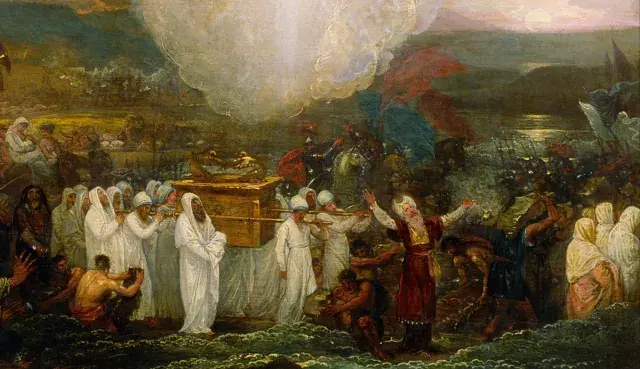
Through this blessing, the priests quite literally placed the Name of the LORD upon the people. To teach them what it meant to bear His Name, God gave the priests the responsibility to transport and care for the Ark of the Covenant—not merely a golden chest but the visible sign of His throne and presence.
“The Ark of God, which is called by the Name—the Name of the LORD Almighty, who is enthroned between the cherubim.” — 2 Samuel 6:2
Each time the Levites lifted the Ark on their shoulders, they carried the covenant and the Name of the LORD. The same Hebrew word used in the third commandment—nāśāʾ (“to lift up or bear”)—describes this act of carrying. In carrying it, the priests enacted the very truth of the third commandment.
When the Ark was borne in obedience and reverence, God fought their battles; when it was treated lightly, judgment came instead.
At the Jordan River the waters stopped; at Jericho the walls fell.
But when Eli’s sons carried the Ark as a charm, it was captured, and when Uzzah touched it, he died. Only when David later carried it rightly, with sacrifice and worship, did blessing return to Jerusalem.
The Ark became a visible sermon on the third commandment: the Name of the LORD must never be borne in vain.
As generations passed, worship became routine and hearts grew distant. The priests who were meant to defend the holiness of the Name began instead to defile it. Their fading reverence would soon open the door to corruption and decline—a story that would spread from priests to people.
3 · The Failures of the Priests
As time passed, the priesthood that once carried the Ark with reverence slowly drifted from its calling. The hands meant to bless in the LORD’s Name began to serve themselves.
They neglected the laws that set them apart. They were commanded to “instruct Israel in all the decrees the LORD has given” (Leviticus 10:11). They were responsible to keep the nation’s worship calendar—Sabbath days, Sabbath years, and festivals (Leviticus 23–25). Leviticus 10–22 gave them detailed instructions on how to approach the altar, what to eat, how to remain ceremonially clean, and how to distinguish between the holy and the common. But instead, the altar filled with defiled sacrifices and empty prayers.
Through Ezekiel, the LORD declared what their conduct had become:
“Her priests do violence to my law and profane my holy things; they do not distinguish between the holy and the common; they teach that there is no difference between the unclean and the clean; and they shut their eyes to the keeping of my Sabbaths, so that I am profaned among them.” — Ezekiel 22:26
Malachi later said:
“It is you, O priests, who despise My Name. But you ask, ‘How have we despised Your Name?’ By offering defiled food on My altar.” — Malachi 1:6–7.
"“And now, you priests, this warning is for you. 2 If you do not listen, and if you do not resolve to honor my name,” says the Lord Almighty, “I will send a curse on you, and I will curse your blessings. Yes, I have already cursed them, because you have not resolved to honor me." — Malachi 2:1-2.
Worship lost its heart; truth gave way to greed. The Name that was meant to bring blessing was treated as common, unlike how the Name was revered and held in awe as in the days of Levi (Malachi 2:3-6).
The priesthood’s failures stretched over generations. Even kings like Hezekiah and Josiah, who restored the Temple and renewed covenant worship, could not make those reforms last. Each revival faded into forgetfulness. The Temple fell into disrepair again and again, and the holiness of the Name was treated as common.
"But by the twenty-third year of King Joash the priests still had not repaired the temple." — 2 Kings 12:6
Because they would not defend His holiness, the LORD began to defend it Himself. The blessing withdrew; His presence started to fade from the Temple.
4 · The Failures of the Kings
Leadership starts at the top. The kings of Israel and Judah lost reverence for the Name upon the throne. The decline began with Solomon. Solomon’s divided heart set the pattern—He built altars for the gods of his many foreign wives, and the land once dedicated to the Name of the LORD filled with idols (1 Kings 11:4–8). Like his heart, the kingdom was split in two, and generations of rulers led the people deeper into rebellion.
In the northern kingdom (10 tribes), Jeroboam proclaimed, “Here are your gods, O Israel, who brought you up out of Egypt.” (1 Kings 12:28-30), turning Israel toward golden calf worship. Those words repeated the sin of Sinai, and the false worship spread through every generation that followed. The prophet Jeremiah delivered the LORD’s rebuke:
“Has this house, which bears My Name, become a den of robbers to you? But I have been watching!” declares the LORD." — Jeremiah 7:11
In the southern kingdom of Judah (2 tribes), their kings were no better, relying on treaties, armies, and idols instead of the LORD, filling their palaces with violence and injustice, and turning the city of the Name into a place of corruption (2 Kings 21:4-7). Isaiah warned:
“Your rulers are rebels, companions of thieves; they all love bribes and chase after gifts” — Isaiah 1:23.
At last the LORD fulfilled His word spoken through Moses:
“If you defile the land, it will vomit you out as it vomited out the nations before you.” — Leviticus 18:28
So the LORD allowed foreign armies to overrun Jerusalem. The LORD had been patient through centuries of warnings, but the time had come for Him to defend His Name in righteousness.
5 · Defense of the Name through Judgment
To understand the real breaking point is to reflect back to when the people asked for a king. In doing so, they rejected the LORD’s rule through judges and wanted what the surrounding nations had—a human ruler to lead them (1 Samuel 8:5–7).
A king’s position carried enormous weight. He was responsible not only to govern the people but to represent them before God.
When a king sought the LORD through the prophets, the nation prospered; when he did not, the kingdom grew dim. As the king did, so did the priests, and as the priests did, so did the people.
"The LORD, the God of their ancestors, sent word to them through his messengers again and again, because he had pity on his people and on his dwelling place." — 2 Chronicles 36:15
Through the centuries God sent prophets to warn the kings—Elijah to Ahab, Isaiah to Ahaz, Jeremiah to Zedekiah—but most kings refused to listen. They preferred alliances with Egypt and Babylon to trust in the LORD.
From Samuel forward, the nation neglected the Sabbath years commanded (Leviticus 25:1-4). Seventy such years were ignored until judgment came: seventy years of exile to let the land rest (2 Chronicles 36:20-21).
Ezekiel was given a vision of that judgment. He saw the Glory of the LORD rise from above the cherubim, move to the threshold of the Temple, pause as if in sorrow over the Mt. of Olives, then depart from the city (Ezekiel 10:18-19; 11:22-23).

In 586 BC the Babylonians breached Jerusalem’s walls. The Temple was burned, the palace destroyed, and the Ark—the symbol of the covenant and of the Name—disappeared.
The people were taken captive, scattered among nations whose idols they had once envied.
The city that bore the LORD’s Name became a proverb among its enemies.
Yet even in judgment, God’s actions defended His holiness. He had warned through Ezekiel:
“I will show the holiness of My great Name, which has been profaned among the nations… then the nations will know that I am the LORD.” — Ezekiel 36:23
When His people would not honor His Name, He did.
Yet we see the fruit of such judgment in 458 BC during the second group of Israelites returning to Jerusalem. Ezra the priest showed amazing leadership and dependence on the LORD. Rather than ask King Artaxerxes for protection during the trip while carrying over 20 tons of gold and silver along with other provisions from the king's treasury and free-will offerings, he asked everyone to pray and fast to the LORD for their safety.
And the LORD provided that protection, maintaining a defense of His Name before the nations and a king whose decree declared His glory and power:
"Whatever the God of heaven has prescribed, let it be done with diligence for the temple of the God of heaven. Why should his wrath fall on the realm of the king [Artaxerxes] and of his sons?" — Ezra 7:23
The exile was not the end of His covenant but its purification. By removing His presence, God declared that His holiness cannot dwell where His Name is borne falsely.
6 · Living in Light of the Name
1) What you just learned
You have learned that bearing the Name of the LORD demands accountability for faithfulness to that Name. When God placed His Name upon Israel, He bound His holiness to their public life before the nations. Faithful bearing of the Name brought blessing and protection; false bearing brought discipline and judgment. These blessings and curses were not arbitrary—they revealed that God will not allow His Name to be treated as empty, common, or disconnected from how His people live.
2) Why this is important
This matters because bearing the Name of the LORD brings unavoidable accountability before God. Scripture consistently teaches that responsibility increases with revelation. Paul reminded the church in Corinth that judgment begins among God’s own people—not because they are condemned, but because they bear His Name before the world (1 Corinthians 5). Sin within the covenant community is treated seriously precisely because it misrepresents the holiness of God. To belong to Him is to be accountable to Him.
Paul also explained that the Law was given so “every mouth may be silenced and the whole world held accountable to God” (Romans 3:19–20), showing that accountability is not punishment for failure but recognition of God’s holiness as the standard of truth. Jesus echoed this principle when He told the Pharisees, “If you were blind, you would not be guilty of sin; but now that you claim you can see, your guilt remains” (John 9:40-41). For the believer, this is not fear of condemnation, but a call to faithfulness. Grace does not erase responsibility—it deepens it. God’s discipline defends the honor of His Name and shapes a people who reflect Him rightly before the world.
3) How this applies to sanctification
The calling to bear God’s Name did not end with Israel; it was fulfilled and extended through Christ. The apostle Paul urged believers, “As God’s fellow workers we urge you not to receive God’s grace in vain” (2 Corinthians 6:1). The phrase “in vain” (eis kenon, “emptily”) carries the same moral weight as “in vain” in Exodus 20:7. To bear the Name falsely in the Old Covenant was to misrepresent God’s holiness; to receive His grace in vain is to misrepresent Christ.
Paul described faithful Name-bearing not as perfection, but as endurance, purity, truth, and sincere love (2 Corinthians 6:3–10). Sanctification, then, is not legalism—it is representation. The calling first given to Israel now belongs to all who belong to Jesus: to live in a way that defends the honor of the Name by reflecting the character of the One who dwells within us.
4) Reflection and orientation
If God was willing to discipline His own people to defend the holiness of His Name, how seriously do we take the privilege of bearing it? Do our lives reflect the grace we have received, or do we receive it “emptily,” without allowing it to shape our conduct? Scripture shows that God’s grace is never cheap—it restores, but it also calls.
The story does not end with exile, silence, or judgment. God defended His Name so that He might dwell again—this time not in a temple made with hands, but in hearts renewed by His Spirit. The question before us is not whether God will be faithful to His Name—He already has been—but whether our lives bear witness to that faithfulness in the way we live, speak, and endure.
Please visit the website at www.bible-is-history.com
Part 6 of 12 in The Dwelling of the Name Series
← Previous Series [The City That Bears His Name]
Next in Series → [The Name in Exile - Witness to the Nations]
To receive new blog notices (wait for pop-up)


Comments