

The Dwelling of the Name: The People who Bear His Name (Part 4 of 12)
Updated: May 1
How God set apart a people called by His Name to reveal His glory to the nations.
© 2025 William F. Spivey Jr. All Rights Reserved (www.bible-is-history.com)
Introduction
When a soldier wears a flag or a team wears its name across a jersey, they represent something larger than themselves. Every action reflects the name they carry.
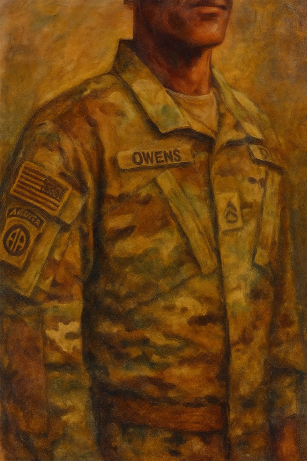
In the same way, bearing God’s Name means representing His character in the world.
In Scripture, God chose a people to carry His Name. From the earliest generations, God marked individuals and their descendants to carry His Name and make it known.
The Bible traces this story through generations, covenants, and nations—showing how God’s Name is not merely spoken but borne by people who live under His promise.
LET’S EXPLORE: From Genesis to Revelation, the Bible tells one continuous story—God’s desire to be in relationship with His creation, to dwell among His people. The Tower of Babel marked the turning point from one people to many nations, as God used language itself to divide humanity—yet His plan to restore unity through His Name had already begun.
"7 Come, let us go down and confuse their language so they will not understand each other.” 8 So the Lord scattered them from there over all the earth, and they stopped building the city." — Genesis 11:7-8
In His sovereignty, the LORD "searches the heart and tests the mind". (Jeremiah 17:10, 1 Chronicles 28:9). He is not bound by space and time—nothing is hidden from his sight (Job 11:7-9, Jeremiah 23:24). He holds the course of history in His Book of Truth (Daniel 10:20-21).
"In their hearts humans plan their course, but the LORD establishes their steps." — Proverbs 16:9
From dispersion came division, yet God’s redemptive plan continued. From one faithful line, He would select a people through whom His Name would again be known on the earth.
In the last blog, we explored the Temple—the place where God chose to dwell and reveal His Name. This next post in The Dwelling of the Name series begins with the family line through which the covenant and relationship would be first revealed: the descendants of Shem, the “people of the Name.”
1 · From Shem to Abraham — The Line That Bore the Name
The story begins with Shem, son of Noah. The Hebrew word šēm means “name,” and it carries the idea of reputation, identity, and memorial. To belong to the line of Shem was, in a sense, to come from “the people of the Name.” From the beginning, God preserved through this line the knowledge of who He is.
From Shem’s family line, faith in the true God was preserved (Genesis 9:26). Shem’s descendants included Eber, his great-grandson, whose name gives rise to the word Hebrew—“the people from Eber.” Generations later, that faith would reappear in a man named Abram, born in a world of idols yet chosen to bear the Name. At seventy-five years old, God called him to leave his country and family, and follow wherever He would lead.
“The LORD had said to Abram, ‘Go from your country, your people and your father’s household to the land I will show you.’ ” — Genesis 12:1
Abram’s obedience was revolutionary. In Canaan, he built an altar between Bethel and Ai and “called on the Name of the LORD.” (Genesis 12:7-8; 13:3-4)
That act—building and calling—linked place, worship, and identity. Abram responded to the living God who revealed His Name. At that altar, the invisible LORD was publicly acknowledged, and through covenant, Abram became known as the friend of God:
“On that day the LORD made a covenant with Abram.” — Genesis 15:18
The covenant was not only a promise of blessing but a transfer of identity—those who belonged to Abram’s line would become known by the Name of his God.
The covenant marked another turning point: God was no longer known only as Creator of all, but as the covenant God who promised both a land and a lineage to a chosen people. Abram's name was changed to Abraham ("father of many"). The promise would pass through to his son, Isaac (the son of promise Genesis 17:19), who later in life also built an altar and called on the Name of the LORD (Genesis 26:23-25).
For Abraham and Isaac, the blessing was given through them—others would be blessed because God’s Name rested upon their lives.
These early patriarchs show that bearing God’s Name begins not with greatness of bloodline or nation, but with faith and obedience—hearing and answering when God calls.
2 · Jacob and Joseph — The People Prepared for Promise
The covenant continued through Jacob, whose life was marked by both struggle and transformation. While Abraham was called and Isaac inherited the promise, Jacob was formed—shaped through trial into the man from whom the tribes of Israel would be born.
God met him in a dream at a place he would name Bethel, meaning “House of God.”
He saw a ladder stretching from earth to heaven, and angels ascending and descending upon it. At the top stood the LORD, confirming the covenant that began with Abraham.
“I am the LORD, the God of your father Abraham and the God of Isaac. I will give you and your descendants the land on which you are lying ... Surely the LORD is in this place, and I was not aware of it… This is none other than the house of God; this is the gate of heaven.” — Genesis 28:13, 16-17
At Bethel, the unseen God revealed that heaven was not closed to earth. The vision of the ladder showed that the LORD’s Presence still reached down to dwell among those who bore His Name.
The God of Abraham and Isaac now became the God of Jacob as well. After years of wrestling and renewal, God renamed him Israel—‘he struggles with God.’ From his twelve sons came the tribes of Israel, a nation that would, like their father, wrestle with obedience and faithfulness.
Through Jacob’s family, God was shaping not just a lineage but a nation. Among Jacob’s sons, God raised up one whose faith would preserve them all—Joseph.
Jacob’s son Joseph, gifted with visions and prophecy, was known to have the LORD with him (Genesis 39:2-3) and he would become the instrument of God’s preservation.
Betrayed by his brothers, sold into slavery, and raised to power in Egypt, Joseph’s story reveals how God’s plan continues to move through suffering.
“You intended to harm me, but God intended it for good to accomplish what is now being done, the saving of many lives.” — Genesis 50:20
Though far from the land of promise, Joseph never forgot the God of his fathers. Commanding his bones be carried to Canaan, he declared that God’s promise would not die in Egypt.
“God will surely come to your aid, and then you must carry my bones up from this place.” — Genesis 50:25
Joseph understood what many would later forget: that to bear God’s Name means trusting His purpose, even when the path leads through exile and hardship.
3 · Moses and the Exodus — The People Who Bear His Name
Centuries after Joseph, the descendants of Jacob grew into a great multitude in Egypt, fulfilling prophecy—but they were enslaved and mistreated. (Genesis 15:5, 13–14)

When their cries rose up to heaven, God remembered His covenant with Abraham, Isaac, and Jacob. Through Moses, He delivered them from bondage and, at Mount Sinai, gave His Law—a covenant charter for a holy nation.
"Then he [Moses] took the Book of the Covenant and read it to the people. They responded, 'We will do everything the Lord has said; we will obey.'” — Exodus 24:7
At Sinai, Israel entered into covenant relationship with the LORD, pledging obedience to His commands. Through this covenant, God made them His treasured possession among the nations.
He also gave the priestly blessing that would forever mark them as the people who bear His Name: "So they will put My Name on the Israelites, and I will bless them.’” (Numbers 6:22–27).
To bear His Name was to live under His favor and reflect His character — a daily reminder that they were His representatives among the nations.
Before Moses’ death, he reminded Israel that their identity rested not on merit, but on mercy (Deuteronomy 7:6–8).
Israel’s calling was to reflect His Name—to live so that the nations would see the distinction between the living God and the idols of the earth. As David later confessed, Israel was redeemed not only for deliverance, but “to make a Name for Himself” among the nations (2 Samuel 7:22–24). Through them, the character of YHWH would be made known.
“Then all the peoples on earth will see that you are called by the Name of the LORD.” — Deuteronomy 28:10
In time, the Israelites would fall into disobedience, testing the covenant they had sworn to keep. Yet the LORD, abounding in love and faithfulness, remained patient—preserving His Name among them until the appointed time of restoration (Exodus 34:6).
4 · The Presence of His Name was conditional
The Presence of God filled the Temple as fire descended on the offerings and the priests could not stand to minister. (2 Chronicles 7:1–2)
This glory confirmed that the covenant was alive—the Name had established its dwelling among His people. But God’s response to Solomon’s prayer carried a warning: if the people turned from obedience, He would remove His Name from the land and the Temple. (1 Kings 9:6–9). The Name marked ownership and God said that his eye and heart would always be there, but His presence required faithfulness. Holiness was not in the stone walls but in the obedience of the heart. His requirement was this:
"if my people, who are called by my Name, will humble themselves and pray and seek my face and turn from their wicked ways, then I will hear from heaven, and I will forgive their sin and will heal their land. Now my eyes will be open and my ears attentive to the prayers offered in this place. I have chosen and consecrated this temple so that my Name may be there forever. My eyes and my heart will always be there." — 2 Chronicles 7:14-16
The Temple stood as proof of God’s covenant faithfulness, but His people would soon learn that His Name is not bound to stone or city—it rests upon those who walk with Him.
5 · The Natural Branch and Wild Shoot
Israel’s rebellion did not erase the LORD’s Name from them—it removed His blessing and His visible Presence. Even in exile, they still bore His Name, though fellowship with Him was broken. Daniel, praying from Babylon, appealed not to their merit but to God’s mercy, saying—“For Your sake, O my God, do not delay, because Your city and Your people bear Your Name.” (Daniel 9:4-19)
After seventy years, God brought them back to their land. They rebuilt the Temple and the walls of Jerusalem, but the glory that once filled Solomon’s Temple did not return. The prophets foresaw a greater fulfillment: the day when the LORD Himself would come to dwell again with His people.
“The glory of this latter temple will be greater than the former.” — Haggai 2:9
That promise found its answer in the Messiah. John the Baptist proclaimed, ‘Repent, for the Kingdom of God is near’ (Matthew 3:1-3)—meaning the King Himself had come. In Jesus, God’s Presence walked among men: the Word made flesh who tabernacled with us (John 1:14). Where the King is, there His Kingdom dwells.
Through Christ, the blessings once lost through rebellion were restored. Scripture looks forward to the fulfillment of this restored dwelling, when God’s people—redeemed and united—will once again live fully in His Presence: “They will be His people, and God Himself will be with them and be their God” (Revelation 21:3).
His Kingdom is no longer written on stone tablets, but on human hearts—through the living Spirit (2 Corinthians 3:3).
“The Kingdom of God is within you.” — Luke 17:21
The prophets also foresaw that this salvation would reach beyond Israel—that the restored Name would be known among every nation.
“I will make you a light for the Gentiles, that you may bring salvation to the ends of the earth.” — Acts 13:47 / Isaiah 49:6

Through faith in Christ, both Jew and Gentile are joined together—grafted into the same covenant branch and nourished by the same root of promise, as reflected in Romans 11:17 “You [Gentiles], though a wild olive shoot, have been grafted in among the others [Jews].” (Romans 11:11-24)
Now, all who believe in Jesus Christ bear the restored Name of God upon their lives. They are a new creation, sealed by the Holy Spirit, marked as His own, and their names are written in the Lamb’s Book of Life.
“They will see His face, and His Name will be on their foreheads.” (Revelation 22:4)
“Rejoice that your names are written in heaven.” — Luke 10:20
The dwelling of God, once lost through sin, is now restored through Christ—His Name upon His people, His Spirit within them, and His Kingdom among them.
Living in Light of the Name
1) What you just learned
You have learned that God’s redemptive plan did not begin with Abraham, but was already unfolding long before him. Through the line of Shem—the “line of the Name”—God preserved the knowledge of who He is even as the nations were scattered. Abraham was not the beginning of God’s plan, but the moment when that plan was formally revealed and covenantally established.
You also learned that when God places His Name upon a people, He does more than identify them—He appoints them. To bear God’s Name is to carry His reputation, to live as His representatives in the world, and to be shaped by His promises and purposes. From the patriarchs to Israel, God’s Name marked identity, belonging, and calling.
2) Why this is important
This matters because God’s Name is never given without expectation. When God placed His Name upon Israel, He also gave His Torah and covenants—not as burdens, but as guides for faithful representation. Those who bear the Name are called to reflect the character of the One they represent. God’s holiness, justice, mercy, and faithfulness were meant to be made visible through the lives of His people.
Israel’s failure did not invalidate the calling; it revealed the seriousness of it. God remained faithful to His Name even when His people were not. And Scripture makes clear that this calling was never meant to stop with one nation. From the beginning, God foretold that His Name would be known among the Gentiles as well—not through replacement, but through restoration and expansion of the same promise.
3) How this applies to sanctification
Sanctification begins with understanding that bearing God’s Name is a responsibility before it is a privilege. It calls for lives shaped by obedience, humility, and faithfulness—not for the sake of appearance, but for the sake of truthful representation. To bear His Name is to live in a way that aligns with His character, whether seen or unseen.
This means that holiness is not optional, and obedience is not arbitrary. Sanctification is the daily practice of living as those who carry God’s Name—conducting ourselves in ways that reflect who He is, not merely what we believe. Faithfulness matters because representation matters.
4) Reflection and orientation
This is not legalism; it is representation. In both the Old Testament and the New Testament, God’s people were never called to obey in order to earn His favor. Israel was given Torah to live in a way that reflected the character of the God whose Name they bore. Likewise, believers in Christ do not walk in obedience to secure salvation, but to live consistently with the Name now placed upon them. Obedience flows from identity, not fear—an expression of who we belong to, not a means of becoming His.
The question, then, is not whether we follow rules, but whether we represent God accurately. Do our thoughts reflect the mind of Christ? Do our words carry truth, humility, and grace? Do our actions make visible the holiness, mercy, and faithfulness of the One whose Name we bear? God entrusts His Name to people so that His character may be seen through them. The call is not to perfection, but to faithful alignment—living with the awareness that our lives speak on His behalf.
Please visit the website at www.bible-is-history.com
Part 4 of 12 in The Dwelling of the Name Series
← Previous Series [The Place That Bears His Name]
Next in Series → [The City That Bears His Name]


Great explanation. Many of these details are so easily overlooked and are rarely explained from pastors. Thanks for spending time on it.