
Spivey's Unauthorized Biblical Timeline
a Scripture-centered journey through God's redemptive story from a historic perspective.

Christianity 101 - Salvation Through Faith in Jesus Christ

The Screwtape Letters by C. S. Lewis is a book outlining a series of fictional letters written from a senior demon, Screwtape, to his apprentice and nephew, Wormwood. It offers advice on how to subtly mislead and corrupt a human soul who has recently become a Christian (“the patient”), though the principles apply at any stage.
Through irony and inversion, C.S. Lewis exposes the strategies of temptation—not through obvious evil, but through distraction, confusion, and shallow understanding. He shows how easily a person can believe they understand spiritual truth while actually operating on assumptions, impressions, and incomplete ideas.
He describes this early stage of belief as being “pictorial.”
Here is an excerpt from early in the book:
"My Dear Wormwood,
I note with grave displeasure that your patient has become a Christian ... At his present stage, you see, he has an idea of "Christians" in his mind which he supposes to be spiritual but which, in fact, is largely pictorial."
What does "pictorial" mean?
“Pictorial” means having a mental picture of Christianity that feels real, but hasn’t yet been tested, understood, or rooted in truth.
A “pictorial” idea of Christianity might be:
-
“Christians are just nice people”
-
“Church is a peaceful place with good music”
-
“Faith is about feeling close to God”
-
“Jesus is kind and gentle, like a painting”
These are not false in themselves—but they are:
-
Incomplete
-
Flattened
-
Not rooted in full truth
As long as the believer stays at the level of mental images, they are easier to mislead.
At the beginning, many new Christians operate from impressions—what they have seen, heard, or assumed.
C.S. Lewis is describing someone stuck at hearing + mental imagery but not yet rooted in understanding.
Faith begins as an image—but it must become something that takes root.
Growth begins when the Word of God moves from an image in the mind to something that takes root in the heart.
To understand this, we must look at how faith is conceived, grows and matures to produce good works.
WHAT IS FAITH?

The Gospel, or “good news,” presented in the Holy Bible is a message of both sorrow and joy.
Sorrow, because sin is disobedience to God. All have sinned, continue to fall short, and sin carries a penalty that must be answered.
Joy, because God did not leave us in our sin. Jesus Christ paid the penalty for sin through His death and resurrection. Eternal salvation is offered as a free gift of grace—but each person must choose whether to receive or reject that gift.
To understand how this gift is received, we must understand what faith is and how faith begins.
The world defines faith as complete trust or confidence in someone or something. Yet trust can be misplaced, shallow, or directed toward the wrong object. Misplaced faith can disappoint, deceive, or fail.
Scripture shows that faith is more than confidence alone. It is God who defines faith, and in His word, He has revealed the true faith that brings salvation. We find examples and explanation in Hebrews 11, and the fulfillment and focus of faith in Hebrews 12 through Jesus Christ.
“Now faith is confidence in what we hope for and assurance about what we do not see.” — Hebrews 11:1
True faith includes confidence and assurance that:
-
God exists in power and glory (Hebrews 11:6)
-
The Holy Bible is the trustworthy Word of God (2 Timothy 3:16)
-
Sin separates us and righteousness acceptable to God is needed (Romans 3:22)
-
Salvation from judgment is possible (John 5:24)
-
God’s promised Redeemer came in Jesus Christ and will come again (Titus 2:11-14)
-
Resurrection brings eternal life (John 6:40)
-
God will fulfill all He has promised (Hebrews 10:23)
These are the promises Christians hope for and the unseen realities in which they place their trust.
Jesus Christ is the one in whom Christians should place their faith.
“Therefore, since we are surrounded by such a great cloud of witnesses, let us throw off everything that hinders and the sin that so easily entangles. And let us run with perseverance the race marked out for us, fixing our eyes on Jesus, the pioneer and perfecter of faith. For the joy set before him he endured the cross, scorning its shame, and sat down at the right hand of the throne of God.” — Hebrews 12:1-2
But how does this faith begin?
HOW FAITH BEGINS

The Word of God can be written or spoken, but once given—joins a cacophony of other messages that compete for our attention. For example, Jesus said:
“I am the way and the truth and the life. No one comes to the Father except through me." — John 14:6
Such statements may seem simple when merely heard, yet the Word of God is like seed being cast into the world. When it is received, it can take hold beneath the surface and begin to grow. The fruit it later produces becomes evidence that faith is living, active, and true.
To get to this evidence, there is a process by which faith truly follows:
-
Hearing
-
Listening
-
Receiving
-
Understanding
-
Response
HEARING
Hearing is a passive act that requires no effort as the message radiates from its source. It happens external to the hearer.
The apostle Paul, who wrote the Book of Romans, asked rhetorical questions regarding how to reach those in Rome with the good news of salvation in Jesus Christ.
-
Romans 10:14-15 "How, then, can they [unbelievers] call on the one [Jesus] they have not believed in? And how can they believe in the one of whom they have not heard? And how can they hear without someone preaching to them? 15 And how can anyone preach unless they are sent?"
His continued instructive writing gave insight into what occurs.
-
Romans 10:17 "... faith comes from hearing the message, and the message is heard through the word about Christ."
Point #1: Those who speak words of faith are not the power behind their words. It is the work of the Holy Spirit that convicts. When the mind is open to the Word of God, it allows for the Holy Spirit to work.
John 16:8 "When he [the Holy Spirit] comes, he will convict the world of guilt in regard to sin and righteousness and judgment: about sin, because people do not believe in me; about righteousness, because I am going to the Father, where you can see me no longer; and about judgment, because the prince of this world now stands condemned."
Point #2: Faith begins with hearing—but not all hearing is the same. Hearing is the first step—it is being exposed to the message. The Word of God is directed at the hearer, but Jesus calls everyone to listen with intent.
Matthew 13:9 "Whoever has ears, let them hear."
Revelation 2:7 "Whoever has ears, let them hear what the Spirit says to the churches."
LISTENING
Listening implies action. The action is still external, but it draws the hearer to pay closer attention to what is heard and implies engagement with the message. It says, “Am I allowing this in?”
-
John 10:27 "My sheep listen to my voice; I know them, and they follow me."
Many can hear the same words, but not all listen to them in the same way.
Jesus taught that hearing alone does not guarantee the message will be received:
Matthew 13:14-15 "In them [the use of parables] is fulfilled the prophecy of Isaiah: “‘You will be ever hearing but never understanding; you will be ever seeing but never perceiving. For this people’s heart has become calloused; they hardly hear with their ears, and they have closed their eyes. Otherwise they might see with their eyes, hear with their ears, understand with their hearts and turn, and I would heal them.’ "
Listening is the gateway to the place were the message is received.
HOW THE MESSAGE IS RECEIVED
RECEIVING
Receiving is when the message moves from being heard externally to being accepted internally. The Word of God is acknowledged as true and allowed to take hold in the heart. (see The Heart of a Person). It answers the question: “Will I accept this as true?”
-
John 6:44-45 "No one can come to me unless the Father who sent me draws them, and I will raise them up at the last day. It is written in the Prophets: ‘They will all be taught by God.’ Everyone who has heard the Father and learned from him comes to me."
His Word of God draws them. The Greek word manthanó means to learn or receive instruction.
If the Word of God is a seed, then the heart is the ground on which the seed is cast. What happens next depends on the condition of the heart.
THE CONDITION OF THE HEART
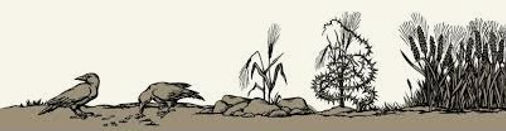
Jesus explained this through the Parable of the Sower.
Matthew 13:1-8 "1 That same day Jesus went out of the house and sat by the lake. 2 Such large crowds gathered around him that he got into a boat and sat in it, while all the people stood on the shore. 3 Then he told them many things in parables, saying: “A farmer went out to sow his seed. 4 As he was scattering the seed, some fell along the path, and the birds came and ate it up. 5 Some fell on rocky places, where it did not have much soil. It sprang up quickly, because the soil was shallow. 6 But when the sun came up, the plants were scorched, and they withered because they had no root. 7 Other seed fell among thorns, which grew up and choked the plants. 8 Still other seed fell on good soil, where it produced a crop—a hundred, sixty or thirty times what was sown.”
He later explained the meaning of the parable.
Matthew 13:18-23 “18 Listen then to what the parable of the sower means: 19 When anyone hears the message about the kingdom and does not understand it, the evil one comes and snatches away what was sown in their heart. This is the seed sown along the path. 20 The seed falling on rocky ground refers to someone who hears the word and at once receives it with joy. 21 But since they have no root, they last only a short time. When trouble or persecution comes because of the word, they quickly fall away. 22 The seed falling among the thorns refers to someone who hears the word, but the worries of this life and the deceitfulness of wealth choke the word, making it unfruitful. 23 But the seed falling on good soil refers to someone who hears the word and understands it. This is the one who produces a crop, yielding a hundred, sixty or thirty times what was sown.”
-
Pathway (hard soil - no ability to receive) - The Word is taken away or does not take hold.
"for he is our God and we are the people of his pasture, the flock under his care. Today, if only you would hear his voice, “Do not harden your hearts as you did at Meribah, as you did that day at Massah in the wilderness," — Psalm 95:7-8
"The coming of the lawless one will be in accordance with how Satan works. He will use all sorts of displays of power through signs and wonders that serve the lie, and all the ways that wickedness deceives those who are perishing. They perish because they refused to love the truth and so be saved." — 2 Thessalonians 2:9-10
-
Rocky (shallow soil layer on stony substrate - no depth and dies quickly) - The Word of God is received quickly, but does not endure.
"Whenever God slew them, they would seek him; they eagerly turned to him again. They remembered that God was their Rock, that God Most High was their Redeemer. But then they would flatter him with their mouths, lying to him with their tongues; their hearts were not loyal to him, they were not faithful to his covenant." — Psalm 78:34-37
"I am astonished that you are so quickly deserting the one who called you to live in the grace of Christ and are turning to a different gospel— which is really no gospel at all. Evidently some people are throwing you into confusion and are trying to pervert the gospel of Christ." — Galatians 1:6-7
“Blessed are you when people insult you, persecute you and falsely say all kinds of evil against you because of me. Rejoice and be glad, because great is your reward in heaven, for in the same way they persecuted the prophets who were before you." — Matthew 5:11-12
-
Thorns (adequate soil - choked by competing weeds) The Word of God begins to grow, but is overtaken by worry or doubt, and produces no fruit.
"For life is more than food, and the body more than clothes. Consider the ravens: They do not sow or reap, they have no storeroom or barn; yet God feeds them. And how much more valuable you are than birds! Who of you by worrying can add a single hour to your life? Since you cannot do this very little thing, why do you worry about the rest?" — Luke 12:23-26
"Those who want to get rich fall into temptation and a trap and into many foolish and harmful desires that plunge people into ruin and destruction. For the love of money is a root of all kinds of evil. Some people, eager for money, have wandered from the faith and pierced themselves with many griefs." — 1 Timothy 6:9-10
"But when you ask, you must believe and not doubt, because the one who doubts is like a wave of the sea, blown and tossed by the wind. That person should not expect to receive anything from the Lord." — James 1:6-7
"By their fruit you will recognize them. Do people pick grapes from thornbushes, or figs from thistles?" — Matthew 7:16
-
Good (tilled soil - broken and receptive) The Word of God produces spiritual fruit. This is the only condition in which the seed fulfills its purpose. Good soil is a contrite heart that is humble and repentant before God.
"The LORD is close to the brokenhearted and saves those who are crushed in spirit." —Psalm 34:18
"You do not delight in sacrifice, or I would bring it; you do not take pleasure in burnt offerings. My sacrifice, O God, is a broken spirit; a broken and contrite heart you, God, will not despise." —Psalm 51:16-17
"A good tree cannot bear bad fruit, and a bad tree cannot bear good fruit. Every tree that does not bear good fruit is cut down and thrown into the fire. Thus, by their fruit you will recognize them." — Matthew 7:18-20
The seed is the same in every case. The difference is the condition of the heart that receives it.
Only what is received deeply will take root.
Only what takes root will produce fruit.
FAITH SEARCHES FOR UNDERSTANDING

UNDERSTANDING
Good soil receives the Word and grows in understanding. Understanding does not require deep knowledge. By searching for context, understanding attaches meaning to the message. It begins when the message is grasped with enough clarity to carry meaning into life by saying, “What does this mean, and how should I live?”
True faith often begins before full understanding. Many new believers trust Christ sincerely, then grow over time in wisdom, discernment, and maturity.
Proverbs 2:1-2 "My son, if you accept my words and store up my commands within you, turning your ear to wisdom and applying your heart to understanding—"
FAITH IS RESPONSE OF TRUST

RESPONSE
True faith is the response of the heart that receives the seed and remains open to the life God gives. What is believed in the heart is expressed outwardly. It says, "I need what I have heard!"
-
Luke 6:45 "A good man brings good things out of the good stored up in his heart, and an evil man brings evil things out of the evil stored up in his heart. For the mouth speaks what the heart is full of."
-
Romans 10:8-10 "... the message concerning faith that we proclaim: If you declare with your mouth, “Jesus is Lord,” and believe in your heart that God raised him from the dead, you will be saved. For it is with your heart that you believe and are justified, and it is with your mouth that you profess your faith and are saved."
This is where faith moves from awareness to commitment. Repentance is both a call and a response: turning away from what is false and turning toward what is true.
-
Matthew 7:13-14 “Enter through the narrow gate. For wide is the gate and broad is the road that leads to destruction, and many enter through it. But small is the gate and narrow the road that leads to life, and only a few find it."
-
Acts 3:19 "Repent, then, and turn to God, so that your sins may be wiped out, that times of refreshing may come from the Lord,"
-
1 Thessalonians 2:13 "And we also thank God continually because, when you received the word of God, which you heard from us, you accepted it not as a human word, but as it actually is, the word of God, which is indeed at work in you who believe."
-
James 1:21 "Therefore, get rid of all moral filth and the evil that is so prevalent and humbly accept the word planted in you, which can save you."
HOW FAITH IS ESTABLISHED AND SAVES

SAVING FAITH
True faith does not achieve salvation—It abandons self-achievement.
Faith says:
-
I cannot save myself
-
Christ has done what I cannot do
-
I trust Him
So faith is the opposite of boasting.
"For it is by grace you have been saved, through faith—and this is not from yourselves, it is the gift of God—not by works, so that no one can boast." — Ephesians 2:8-9
Grace comes wholly from God and is the source of salvation: It is seen in:
-
God’s undeserved favor
-
God’s initiative
-
God’s provision in Christ
-
God acting before we could earn anything
“But God demonstrates his own love for us in this: While we were still sinners, Christ died for us.” — Romans 5:8
Faith is the God-appointed means by which grace is received (see What is Faith?).
The human response of faith does not earn salvation or add to it. It trusts what God has already provided through Jesus Christ.
Gift of God shows that salvation comes from God, not from human effort.
"Now to the one who works, wages are not credited as a gift [favor] but as an obligation [debt]. However, to the one who does not work but trusts God who justifies the ungodly, their faith is credited [reckoned or counted] as righteousness." — Romans 4:4-5
Salvation through faith is the beginning of a restored relationship with God.
To know what it means to follow Christ, the next step is to understand who God is—Father, Son, and Holy Spirit.
Continue to Christianity 102 — Knowing God: Father, Son, and Holy Spirit