

The Dwelling of the Name: The Name in Exile - Witness to the Nations (Part 7 of 12)
Updated: Jan 9
The Presence departed, but the Name endured—evidence of God’s faithfulness in exile and promise of return.
© 2025 William F. Spivey Jr. All Rights Reserved (www.bible-is-history.com)
Introduction

When fire consumed the roof of Paris’s Notre-Dame Cathedral in 2019, the world watched in silence as centuries of artistry and faith collapsed in smoke. People wept for the loss of a landmark—a masterpiece of stone and glass that symbolized worship, even though for many it had long ceased to be a place of worship.
What the crowd mourned was beauty, memory, and meaning woven into a building.
Yet when dawn broke, a single golden cross still gleamed amid the ruins—untouched, unconsumed.
In the same way, when Jerusalem fell the sanctuary was gone—its rituals silenced, its walls reduced to ashes. The same pattern of grief unfolded when Jerusalem fell. Many may have mourned the loss of the Temple’s grandeur more than the loss of true devotion. But amid the ruin, one thing remained unchanged: the Name of the LORD—the one reality that could not be burned or banished.
Atonement ceased; the feasts lost their joy; blessing vanished from the land. But the covenant Name—YHWH, He Is—remained bound to His people. The Presence left; its visible fire faded, yet the Word that revealed Him still burned in the hearts of a faithful remnant.
Israel was commanded to live differently—to bear His Name in holiness before the nations—but they did not. They desired the ways of the peoples around them, and God’s judgment was to give them what their hearts loved most. Psalm 106 tells the story of that pattern: forgetfulness, rebellion, mercy—and the steadfast faithfulness of the Name.
The LORD sent prophets “again and again,” showing compassion on His people and on His dwelling—both associated with His Name—yet:
“They mocked God’s messengers, despised His words and scoffed at His prophets until the wrath of the LORD was aroused against His people and there was no remedy.” — 2 Chronicles 36:15–16
Suffering became the mirror of remembrance. Only when everything else was gone could Israel see what had never been lost—the holiness of the Name they bore. Through loss, God called them to remember that His covenant faithfulness cannot be exiled.
“And if you defile the land, it will vomit you out as it vomited out the nations that were before you.” — Leviticus 18:28 (see also Ezekiel 36:20-21)
Exile was the cleansing that preserved His holiness for a future return.
LET’S EXPLORE: From Genesis to Revelation, the Bible tells one continuous story—God’s desire to be in relationship with His creation, to dwell among His people. The people of Israel carried into exile, not the name of a human king, but the sacred Name of the LORD—holy, powerful, and set apart. What will become of their witness?
In the last blog, we learned that the Israelites did not bear the Name with the reverence required in the third commandment; the LORD of righteousness will defend the honor of His Name even if His people will not.
In this next post in The Dwelling of the Name series, we follow the story into exile to see how the Name went with the people, how it became their witness among the nations, and how, through a faithful remnant, the LORD prepared the way for the Messiah.
1 · Evidence of Name as Witness in Exile
The Presence departed from the Temple, but the Name did not abandon His people.
“Though I have removed them far among the nations, yet I have been a sanctuary for them in the countries where they have gone.” — Ezekiel 11:16
Wherever His covenant Name was honored, He continued to act on behalf of those who were devoted to Him. Faithfulness became evidence that His Name still dwelt among them.
Daniel and three exiled nobles resolved not to defile themselves in Babylon. God gave them knowledge and understanding, and to Daniel insight into visions and dreams (Daniel 1:8-17).
Their faithful witness of the Name brought praise to God from the nations. King Nebuchadnezzar II said "Surely your God is the God of gods and the Lord of kings" and "Praise be to the God of Shadrach, Meshach and Abednego" (Daniel 2:47, 3:28).
Later, Daniel cried out in prayer after linking Jeremiah's prophecy to a defined 70 years of exile, “O Lord, hear! ... Do not delay, because Your city and Your people bear Your Name.” (Daniel 9:19)
The witness also reached the throne room of King Cyrus I of Persia, whom God had named through the prophets generations earlier (Isaiah 44:28; 45:13; Jeremiah 25:11–12). Even foreign rulers acknowledge the God whose Name rules over all nations:
“The LORD [YHWH], the God of heaven, has given me [King Cyrus] all the kingdoms of the earth and has appointed me to build a temple for Him at Jerusalem.” — Ezra 1:2
Later, under King Xerxes I of Persia [Ahasuerus], God used the courage of Queen Esther to preserve the people who bore His Name. When Haman plotted annihilation, Esther stood in their defense; royal decrees protected the Jews, and even Gentiles turned in awe:
“Many of the peoples of the land [Persia] became Jews because fear of the Jews had seized them.” — Esther 8:17
When Nehemiah heard that Jerusalem’s walls were broken, his grief became prayer:
“They are Your servants and Your people, whom You redeemed by Your great strength and Your mighty hand. O Lord, let Your ear be attentive to the prayer of this Your servant… who delight in revering Your Name.” — Nehemiah 1:10–11
He found favor in the eyes of King Artaxerxes I of Persia, who financed the reconstruction of the walls and gates. That royal authorization aligns with the “word to restore and rebuild Jerusalem” that marks the prophetic countdown to the Anointed One (Daniel 9:25).
From palace to fiery furnace, from throne to rubble, the evidence was undeniable: the Name of the LORD remained with His people. He defended His reputation through their obedience, displayed His power through their trials, and stirred nations to accomplish His purpose.
At the end of the 70 years of exile, God moved three groups—the tribes of Judah and Benjamin, and the priests and Levites—as a remnant of His choosing, to foreshadow that His presence and the full revelation of the Name would one day return.
"Then the family heads of Judah and Benjamin, and the priests and Levites—everyone whose heart God had moved—prepared to go up and build the house of the Lord in Jerusalem." — Ezra 1:5
2 · Judah: A Witness of Kingship
From the beginning, kingship was tied to the covenant Name. Even before Israel had human kings, God revealed that the line of rulership—and the honor of His Name—would rest on Judah. When Jacob blessed his sons, he spoke of Judah with prophetic clarity:
“Judah, your brothers will praise you; your hand will be on the neck of your enemies; your father’s sons will bow down to you. The scepter will not depart from Judah, nor the ruler’s staff from between his feet, until He to whom it belongs shall come and the obedience of the nations shall be His.” — Genesis 49:8-10
That promise marked Judah as the tribe through which the Name [Messiah] would one day reign. Israel’s later kings—David and Solomon—ruled under that covenant, and their throne was called “the throne of the LORD” (1 Chronicles 29:23). The scepter was hidden, but it was not broken.
The Name preserved David’s line even in captivity, keeping the royal seed alive for the day of restoration. In Babylon and later in Jerusalem, families traced their lineage not for pride but for promise—evidence that the LORD had not forgotten the covenant He swore by His Name. Through the prophets, God reaffirmed His intent:
“I will raise up to David a righteous Branch, a King who will reign wisely and do what is just and right in the land. In His days Judah will be saved and Israel will live in safety. This is the Name by which He will be called: The LORD Our Righteousness.” — Jeremiah 23:5-6
The prophets looked ahead to the day when the Lion of the tribe of Judah would rise—
the One who would bear the Name fully and forever, whose reign would join heaven’s authority with human redemption.
The royal line of Judah held the promise of kingship, but the inheritance of Benjamin held the ground where the Name would dwell—the land and the holy city between the shoulders of God.
3 · Benjamin: The Witness of the Land
Benjamin’s name and territory carry two converging meanings that preserved the place of His dwelling and foreshadowed His Right Hand.
The covenant was not only about a people but also about a place. When the LORD chose a land for His inheritance, He called it “the land the LORD your God cares for; His eyes are continually upon it.” (Deuteronomy 11:12). That land became the physical stage of His Name—the ground sanctified for His dwelling.

When Moses blessed the tribes, he spoke of Benjamin with tender significance:
“Of Benjamin he said, ‘The beloved of the LORD shall dwell in safety by Him;
the LORD shall cover him all the day long, and he shall dwell between His shoulders.’” — Deuteronomy 33:12
Benjamin’s territory lay between the shoulders of Judah’s hills—a narrow ridge where Jerusalem would one day stand. Mount Zion and the Temple Mount itself rose on Benjamin’s northern boundary, where the boundaries of Judah and Benjamin met—the LORD placed His Name forever (1 Kings 9:3).
In this geography, grace and government touched: Judah’s kingship joined Benjamin’s dwelling. The Land and the Name. The beloved tribe quite literally “dwelt between His shoulders,” close to the heart and might of God.
Also, the name Benjamin (בִּנְיָמִין) means “son of my right hand.” Throughout Scripture, the right hand symbolizes power, favor, and the execution of God’s will:
“Your right hand, O LORD, is majestic in power; Your right hand, O LORD, shatters the enemy.” — Exodus 15:6
Benjamin’s name therefore anticipates the One who would be called the Right Hand of God—the Messiah through whom the Father’s power and covenant purpose are revealed.
While Judah carried the promise of rule and Benjamin guarded the ground of God’s dwelling, the tribe of Levi was set apart to preserve the holiness of the Name through worship, instruction, and sacrifice.
4 · Levi: The Witness of Priesthood and Zeal
From the wilderness to the exile, Levi’s calling was to stand between God and the people—to remind Israel that the LORD is holy. When Israel worshiped the golden calf at Sinai, it was the sons of Levi who stepped forward in zeal for the LORD.
“Whoever is for the LORD, come to me [Moses]!” And all the Levites rallied to him.” — Exodus 32:26
Their obedience that day defined their destiny:
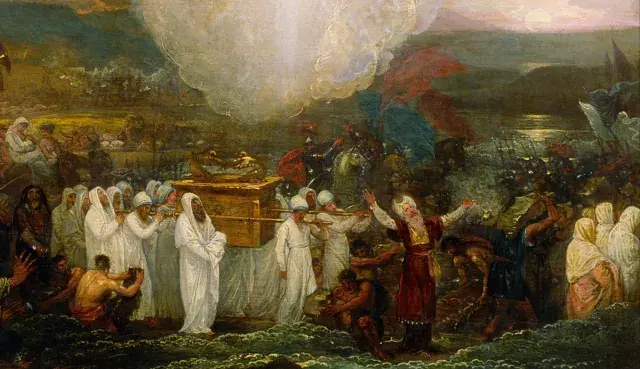
“At that time the LORD set apart the tribe of Levi to carry the ark of the covenant of the LORD, to stand before the LORD to minister and to pronounce blessings in His Name.” — Deuteronomy 10:8
The Levites were not given land like the other tribes because the LORD Himself was their inheritance (Deuteronomy 10:9). Their portion was the privilege of bearing the Name.
Centuries later, through the prophet Malachi, God reaffirmed Levi’s unique covenant:
“My covenant was with him [Levi], a covenant of life and peace, and I gave them to him; this called for reverence, and he revered Me and stood in awe of My Name.” — Malachi 2:5
The Levites were known for holy zeal—a passion to guard what is sacred. That same zeal would later be a characteristic of the Messiah:
“Zeal for Your house will consume Me.” — Psalm 69:9
The tribe of Levi offered temporary sacrifices that pointed beyond themselves. Even the psalm of David foresaw a priesthood higher than Levi’s. Their ministry anticipated the Messiah as a greater priest who would serve not by lineage but by divine oath:
“You are a priest forever, in the order of Melchizedek.” — Psalm 110:4
Through every generation, God preserved a priesthood as witness that His Name is holy.
Judah guarded the promise of rule, Benjamin held the place of dwelling, Levi preserved the holiness of worship—and through the prophets, the LORD announced that His Name would return, not in cloud or temple, but in living presence among His people.
“They will be Mine [those who fear the LORD and honor His Name],” says the LORD Almighty, “in the day when I make up My treasured possession. I will spare them ... those who serve God ...” (Malachi 3:16-18, also see Exodus 19:5)
5 · The Prophets: Witness of the Return
While kings fell and priests wept, the voice of the LORD did not fall silent. Through His prophets He proclaimed that exile would not be the end—but the means by which His Name would be vindicated and His covenant restored.
Their message was not simply national return, but the vindication and return of the Name’s dwelling—God Himself making His holiness known again among a purified people
Ezekiel, the prophet of exile, saw what few others did: the glory leaving the Temple (Ezekiel 10:18-19), yet he also saw the promise of its return.
“I will show the holiness of My great Name, which you have profaned among the nations… Then the nations will know that I am the LORD, declares the Sovereign LORD, when I show My holiness through you before their eyes.” — Ezekiel 36:23
Jeremiah prophesied before and through the exile, warning that Judah’s unfaithfulness had profaned the Name of the LORD (Jeremiah 34:16). Yet he also delivered one of Scripture’s most tender promises:
“The days are coming,” declares the LORD, “when I will make a new covenant with the house of Israel and with the house of Judah.” — Jeremiah 31:31
After the return, the prophets Haggai and Zechariah called the remnant to rebuild the Temple and remember whose Name it bore. Haggai urged,
“The glory of this present house will be greater than the glory of the former house,” says the LORD Almighty, “and in this place I will grant peace.” — Haggai 2:9
That “greater glory” would not come from gold or stone but from the Presence that would again fill the house. Zechariah expanded the vision:
“Shout and be glad, Daughter Zion. For I am coming, and I will dwell among you,” declares the LORD. “Many nations will be joined with the LORD in that day and will become My people.” — Zechariah 2:10-11
Through these prophets the LORD announced that His Name would not only return to Zion but would also reach the nations—what Israel failed to do in obedience, God Himself would accomplish in grace. The final prophet of the Old Testament, Malachi, closed the era of anticipation with a universal proclamation:
“My Name will be great among the nations, from where the sun rises to where it sets. In every place incense and pure offerings will be brought to Me, because My Name will be great among the nations,” says the LORD Almighty." — Malachi 1:11
Though the Temple stood once more, true worship awaited a purer offering. Malachi promised that the “messenger of the covenant” would come to refine the sons of Levi (Malachi 3:1-3). The stage was set for the return of the Presence and the Name—the Word who would bear the Name in flesh.
The prophets saw dimly what the Gospel would reveal fully—the coming of the Anointed One, in whom the holiness of the Name and the mercy of God would meet.
6 · Living in Light of the Name
1) What you just learned
You have learned that exile does not mean abandonment. When Israel lost land, temple, sacrifices, and visible blessing, they did not lose the LORD or His Name. The Presence departed from the Temple, but the covenant Name remained bound to the people. Even in judgment, God was actively preserving His holiness, His promises, and the future return of His dwelling among them.
You also learned that exile became a place of witness. Stripped of structures and rituals, Israel was forced to bear the Name through faithfulness alone—through obedience, prayer, courage, repentance, and trust in God’s word. In Babylonian courts, Persian palaces, and foreign lands, the LORD made His Name known not through fire and cloud, but through lives shaped by reverence and faith.
2) Why this is important
This matters because exile reveals what truly sustains faith. When comfort, familiarity, and visible blessing are removed, what remains is either the Name—or nothing at all. God allowed exile not to erase His people, but to refine them, so that His holiness would not be confused with buildings, rituals, or national success. Judgment became the means by which His Name was defended and His covenant purified.
For believers, this reframes suffering and loss. Seasons of silence, displacement, discipline, or unanswered prayer are not signs that God has withdrawn His faithfulness. Often, they are evidence that He is preserving something deeper—our dependence, our witness, and our alignment with His character. The same God who remained faithful to Israel in exile remains faithful to His people now, even when His presence feels hidden.
3) How this applies to sanctification
Sanctification has an opportunity to deepen most during exile moments. When God removes what we lean on, He reveals what we trust. Growth in holiness is not forged only in blessing, but in endurance—learning to honor the Name when obedience is costly and visibility is low.
This is why the apostle Paul described faithful bearing of the Name not in terms of comfort or success, but through endurance, purity, truth, patience, sincere love, and perseverance through hardship (2 Corinthians 6:3-10). His language deliberately echoes the warning of the Third Commandment: God’s grace, like God’s Name, must not be borne emptily.
Just as Israel learned to carry the Name without a temple, believers are to reflect Christ without relying on circumstance. Sanctification in the exile moments of our lives will train the heart to honor God for who He is, not for what He provides—preparing a people who can bear His Name faithfully when His Presence is fully revealed.
4) Reflection and orientation
If God’s Name remained with His people in exile, what does my response to hardship reveal about how I view Him? Do I measure God’s faithfulness by comfort and success, or by His unchanging character and promises? When familiar supports are stripped away, does my life still bear witness to the holiness of His Name?
Exile asks a deeper question: If everything else were taken, would the Name still remain evident in how I speak, trust, endure, and obey? The God who preserved His Name through exile is the same God who walks with His people now—patient, purposeful, and faithful—using even loss to prepare hearts for the day when His dwelling will no longer be hidden, delayed, or resisted.
Please visit the website at www.bible-is-history.com
Part 7 of 12 in The Dwelling of the Name Series
← Previous Series [A Defense of His Name]
Next in Series → [The Name in Flesh]
To receive new blog notices (wait for pop-up)


Comments